
Canada's Build Canada Homes Program
The newly launched Build Canada Homes (BCH) program is stirring up debate. Announced on September 14, 2025, by Prime Minister Mark Carney, it's positioned as a bold move to tackle the housing crisis. But as you dig deeper into the critiques from experts, developers, and analysts, the questions becomes if this will truly help average homeowners or if it's another layer of government intervention that misses the mark.
10/22/20253 min read
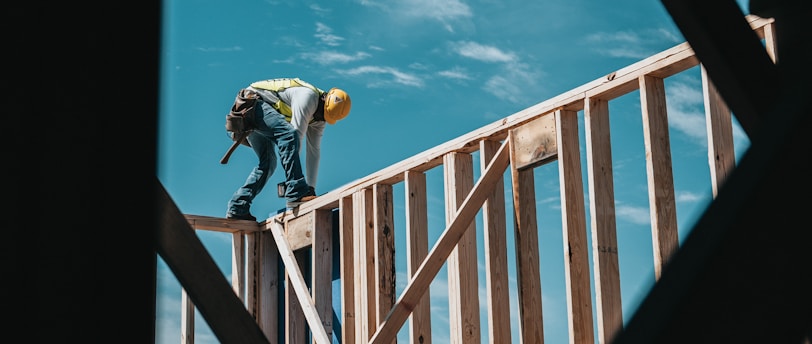

Build Canada Homes is Canada's new federal agency under Housing, Infrastructure and Communities Canada (HICC), aimed at directly building affordable homes to address the shortage. It revives government-led construction on a scale not seen since post-World War II, with goals to double annual housing starts to 500,000 units, focusing on affordable, non-market, and community housing.
Key elements include:
Building affordable homes: Developing large-scale projects on public lands (e.g., 88 federal properties spanning 463 hectares), partnering with private developers, provinces, and Indigenous communities. Initial targets: 4,000 factory-built units on six sites, scalable to 45,000.
Financing affordable homes: $10 billion in low-cost loans for non-market providers and $1.5 billion for the Canada Rental Protection Fund to preserve rentals.
Catalyzing the industry: $25 billion investment in modular, prefabricated, and mass timber methods to reduce build times by 50%, costs by 20%, and emissions by 20%, using Canadian materials
With $13 billion initial funding (plus $3.5 billion annually), BCH has appointed CEO Ana Bailão and is launching pilots like modular builds in Toronto, with at least 40% below-market units. It targets low-income groups, the homeless, Indigenous communities, and equity-deserving populations, but claims broader benefits through increased supply.
The Pros of Build Canada Homes
For markets like Hamilton and Brantford, where supply is tight, BCH could offer some relief.
Increased Supply and Affordability: Using federal lands and fast-tracking could add units quickly, potentially stabilizing prices in high-demand areas.
Innovation and Efficiency: Prefab tech promises faster, cheaper builds, benefiting local projects.
Economic Boost: Job creation in construction and manufacturing, plus stronger supply chains.
Targeted Support: Addresses homelessness with $1 billion for transitional housing, indirectly helping the market.
The Cons of Build Canada Homes: Why It Might Not Help Average Homeowners
While the pros sound appealing, critics, including the Fraser Institute, NDP, and developers, are raising red flags, arguing BCH is a costly distraction that won't meaningfully boost homeownership.
Costly Distraction Ignoring Root Causes: BCH commits $13 billion upfront (plus $3.5 billion yearly) but only aims for about 5,000 units annually, barely 2% of the needed boost to 500,000 starts. It diverts focus from real barriers like municipal regulations, high development taxes (up to 30% of costs), and slow approvals (25 months in Toronto), which stifle private builders creating market-rate homes for ownership. It over-relies on government intervention instead of cutting barriers like taxes or approvals to let the private sector build affordably.
Heavy Rental Focus Won't Boost Ownership: Prioritizing below-market rentals and non-market units (e.g., 40% below-market in pilots) offers little for buyable homes, potentially shifting private investment away and making family ownership harder.
Modular Hype Overblown: Betting on prefab for 20% cost and 50% time savings is "no silver bullet." Savings are uncertain, with challenges like transport and weather, making it a better solution for suburbs than urban density.
High Taxpayer Risk with Little Return: Federal mismanagement of real estate (e.g., slow office downsizing, missing targets) suggests BCH could flop like New Zealand's KiwiBuild, wasting billions without adding much meaningful inventory to the market.
These cons suggest the program's flaws could outweigh benefits, especially for ownership-focused buyers.
How Build Canada Homes Affects Home Buyers and Average Homeowners
For buyers, BCH supports mixed-income communities with some ownership potential, plus buyer incentives like GST exemptions on new homes under $1 million (saving up to $50,000 for first-timers). Increased supply could indirectly stabilize prices, helping average earners ($60,000–$80,000) avoid bidding wars.
But will it help the average homeowner? Critics say no—it's not targeted at existing owners, and more supply might slow appreciation, though it could ease upgrades. For those struggling to buy, rentals are positioned as a "stepping stone," but the heavy non-market focus raises concerns about a long-term rental push.
The emphasis on rentals (via tax breaks and preservation funds) contrasts with lighter red-tape cuts, like halving development charges or expanding the Housing Accelerator Fund. While reforms aim to derisk private building, the cons above highlight how BCH might not address root issues, potentially leaving ownership elusive. In my view, it fills affordable gaps but won't revolutionize homebuying without stronger private-sector boosts.
What It Means for Canada, Its Economy, and Real Estate Over the Next 10 Years
For Canada, BCH signals proactive intervention for inclusive housing but could fuel overreach debates if it underdelivers.
Economically, it could stimulate via construction jobs and prefab productivity, but overruns risk inflating deficits.
In real estate, a supply surge in affordable rentals might stabilize prices by 2035, easing pressures in Ontario hotspots like Hamilton. However, if cons prevail, it could distort markets, slowing ownership growth while favoring rentals.